
Ship owners registering or operating a Malaysian-flag vessel will run into the term “Recognized Organization” early - usually on a statutory certificate, in a survey report, or in a shipyard’s newbuilding contract. It’s a specific legal status, not a marketing label, and it determines who is legally allowed to survey a vessel and issue certificates on the government’s behalf.
The short answer
A Recognized Organization (RO) is a classification society formally authorized by a Flag State to carry out statutory surveys and issue statutory certificates on that state’s behalf. In Malaysia, this authorization comes from the Ministry of Transport (MOT) and Jabatan Laut Malaysia (the Marine Department), under the RO Instructions 2022 and the Merchant Shipping Ordinance 1952.
Without RO status, a classification society can still class vessels against its own technical rules, but it cannot issue the statutory certificates - load line, safety construction, safety equipment, pollution prevention - that a Malaysian-flag vessel is legally required to carry. Those certificates can only be issued by the Marine Department itself, or by an organization the Marine Department has formally recognized to act on its behalf.
Why the distinction matters for ship owners
Classification and statutory certification are often bundled together in conversation, but they answer two different questions:
- Classification asks whether a vessel’s hull, machinery, and equipment meet a set of technical rules, and confirms this through survey. It’s a private contract between the owner and the classification society.
- Statutory certification asks whether a vessel complies with the law - the IMO conventions Malaysia has ratified, applied through Malaysian legislation. It’s a regulatory requirement, not optional.
A vessel can be in class without holding statutory certificates, and in principle the Marine Department could survey a vessel for statutory certificates without that vessel being in class anywhere. In practice, most owners want both handled by the same organization in the same attendance, which is only possible if that organization holds RO status.
This is also where owners run into risk if they don’t check credentials before engaging a surveyor: a class certificate from an organization without RO status does nothing to satisfy the statutory requirement to carry valid load line, safety, and pollution-prevention certificates. The vessel would still need a separate attendance from an actual RO, at extra cost and delay.
What RO status covers in practice
An RO’s authorization from the Marine Department is not unlimited - it’s granted for a defined scope, which typically covers:
- Which conventions and certificate types the RO can issue (load line, safety construction, safety equipment, International Oil Pollution Prevention, and others under the mandatory IMO instruments).
- Which vessel types and trading areas are within scope - domestic waters, or domestic plus international waters up to a defined region.
- The period of appointment, after which the RO’s status is reviewed and renewed.
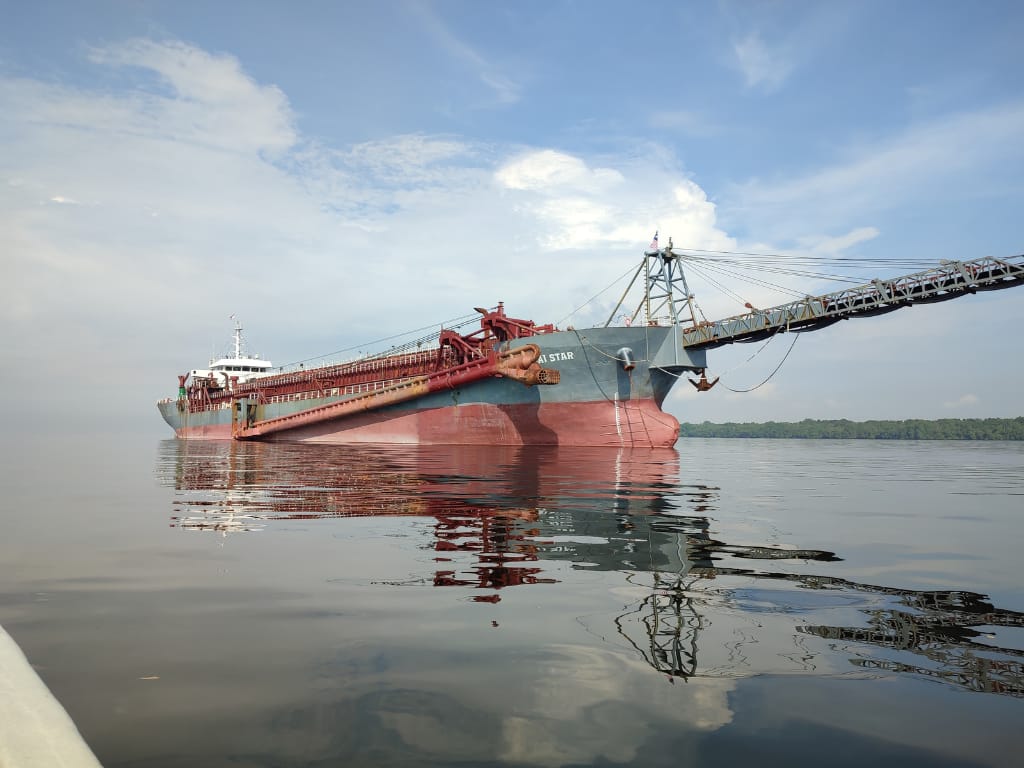
MY Classification holds RO appointment from the Ministry of Transport, most recently renewed and formalized under Merchant Shipping Notice 07/2025, covering Malaysian-flag vessels in domestic waters - with operating limits extended to ASEAN waters for smaller vessels - and including dredgers, sand carriers, and 3-in-1 vessels. We also hold Recognized Security Organization (RSO) status, which is the equivalent authorization for ISPS Code security certification and port facility security assessments - a separate appointment, since security certification sits under a different IMO instrument than the safety and pollution-prevention certificates above.
How to check an RO’s status before engaging one
Because RO status is a government appointment rather than a self-declared credential, it’s verifiable. Before engaging a classification society for statutory work on a Malaysian-flag vessel, owners can:
- Ask for the Merchant Shipping Notice or Marine Department circular formalizing the organization’s current RO appointment, including its scope and expiry.
- Confirm the vessel’s trading area falls within that scope - an RO authorized for domestic waters only cannot issue statutory certificates for a vessel trading internationally.
- Check whether RSO status is held separately, if the vessel also requires ISPS security certification.
Where classification fits alongside RO status
RO status governs the statutory side. The classification side runs alongside it under the organization’s own class rules, typically following a five-year survey cycle of annual, intermediate, and renewal surveys. For vessels being built new rather than already in service, the same RO status applies to newbuilding plan approval and construction survey, described on our newbuilding services page.
Owners with a vessel already in class, or a newbuilding under construction, can see current RO and RSO recognitions on our downloads page, or request a quote for a class or statutory survey.